The Learning Base/SEN


BGN SEND UPDATE
I hope you all had a lovely and restful half term.
We have really enjoyed welcoming our new Year 7 students, as well as new students joining us across all year groups. It has been lovely getting to know them and helping them settle into life at BGN.
During the first half term, our focus was on belonging. We know how important it is for every young person to feel valued, accepted and part of their school community. Research supports this too, highlighting strong links between a sense of belonging, wellbeing, motivation and engagement with learning.
We have been working hard to help students feel settled and supported. This has included helping students return to lessons, offering nurture check-ins and providing additional support where needed. The Nest has also offered a safe and welcoming space for students to eat, spend time together and make friends away from the busyness of the wider school.
Belonging goes beyond the work of the SEND team. Across BGN, there are so many opportunities for students to come together and feel part of our community including assemblies, Masses, clubs, trips, house festivals and competitions. We want every student to find their place and feel that they are known, valued and included.
We are committed to continually developing and improving the support we offer. We have really valued working alongside The Mulberry Bush specialist school, developing our understanding of de-escalation strategies, sensory needs and ways to make our classrooms more inclusive. This is helping us to think about how we can better understand our students and remove barriers to learning.
Looking ahead, two of our main priorities this year are communication with families and reviewing the impact of interventions. We recognise that parents and carers are such an important part of the team around every child. You know your children better than anyone, and we really value the knowledge and insight you bring. We want to listen, build strong relationships and work together to give every child the best possible support.
We will also be looking carefully at the interventions we put in place, making sure they are purposeful, appropriate and, most importantly, making a real difference. We want to understand what is working well and where we can make improvements.
We are genuinely excited about working with all students who access SEND support. We look forward to celebrating their successes, getting to know them even better and helping them overcome any barriers they may face.
Thank you, as always, for your continued support.
Mrs Elliot
BGN SEND Team
P.S If you haven't already check out BGN's Facebook page for all the latest school news
Blessed George Napier School | Banbury | Facebook
SEND DEPARTMENT STAFFING UPDATES

- Mrs Elliot - SENDCo
- Mrs Wyatt - Assistant SENDCo
- Miss Bisson - Assistant SENDCo ( Take 10 and Specialist Support)
- Mrs Harvey - HLTA Literacy (Cognition and Learning) and Access Arrangement Coordinator
- Mrs Mason - HLTA Numeracy (Cognition and Learning)
- Mrs Meadows - HLTA Autism and Handwriting specialist (Communication and Interaction)
- Mrs Lowe - LSA - Regulation and de-escalation support (Social, Emotional and Mental Health)
- Mrs Kennedy- ELSA Emotional Literacy Support Assistant (Social, Emotional and Mental Health)
- Miss Kiss - LSA delivering Lego Therapy and KS3 Social Circles (Communication and Interaction)
- Miss Kirk - LSA (Sensory and/or Physical Needs)
- Miss Britton- LSA Drawing and Talking Practitioner (Social, Emotional and Mental Health)
- Mrs Robbins - LSA offering Touch Typing sessions and supporting students with EHCPs
BGN SEND PADLET

Our BGN SEND Information and Signposting Padlet is a useful resource for parents and carers, bringing together information, advice and links to services that can support children and families.
It includes guidance on the Oxfordshire County Council Local Offer, The Learning Base, mental health and wellbeing, online safety, autism and ADHD assessments, Education, Health and Care Plans (EHCPs) and support for children who are finding school attendance difficult.
Whether you are exploring additional support, looking for advice or simply want to find out what help is available, the Padlet is a useful starting point.
Explore the BGN SEND Padlet:
https://padlet.com/kelliot17/bgn-send-information-and-signposting-rj10a89itewc58t8
COMMUNICATION
At BGN, we are committed to working closely with families to ensure that every child receives the support they need to thrive at school.
Your child’s form tutor should always be your first point of contact, as they play a key role in supporting your child and advocating for their needs within school. Our pastoral teams, Heads of Year and SEND Team are also available to provide additional support where appropriate.
SEND Parent Meetings
Throughout the Year
We recognise the importance of regular communication with families. Many year groups will already have had the opportunity to attend information evenings at the start of the academic year, and there will be further opportunities to meet with staff throughout the year.
Our SEND Team will offer both online and face-to-face appointments. To help us manage these meetings effectively, while ensuring that our main priority remains delivering high-quality support to the students in front of us each day, we aim to focus on particular year groups each term.
Our planned SEND meeting schedule is:
- Term 2: Year 7
- Term 3: Years 8 and 10
- Term 4: Year 11
- Term 5: Year 9
- Term 6: Year 12
We will contact families during their allocated term with information about how to book an appointment, should one be required.
Parents' Evenings
Parents' Evenings are also scheduled throughout the academic year and provide another valuable opportunity to discuss your child's progress and support. Appointments with the SENDCo will be available to book during these evenings.
The confirmed Parents' Evening dates are:
Sixth Form (Years 12 & 13): Thursday 12 November 2026
Year 11: Thursday 14 January 2027
Year 9: Thursday 4 February 2027
Year 8: Thursday 11 March 2027
Year 7: Thursday 22 April 2027
Year 10: Thursday 15 July 2027
Annual Reviews for Students with EHCPs
Annual Reviews for students with an Education, Health and Care Plan (EHCP) will be scheduled separately throughout the academic year, in line with statutory requirements. Families will be contacted directly with details of their child's Annual Review.
Ongoing Communication and Support
Of course, communication and support are not limited to scheduled meetings. Your child's form tutor, teachers, pastoral team, Head of Year or the SEND Team may contact you at other points throughout the year, as appropriate, to discuss progress, celebrate successes or address any concerns.
If you have an urgent concern, please do not feel that you need to wait until your child's allocated term or Parents' Evening. We understand that children's needs do not follow a timetable, and we will always aim to respond to urgent matters as promptly as possible.
We appreciate your understanding as we balance opportunities for meaningful conversations with families alongside the important day-to-day work of supporting our students.
EXAM ACCESS ARRANGEMENTS

Each year many parents have queries regarding Examination Access Arrangements (EAA). EAAs and Reasonable Adjustments are tightly governed by the Joint Council for Qualifications (JCQ). Arrangements are put in place to ensure a “level playing field” for all students by removing barriers created by a long-term (12 months +) substantial disability or learning disability, as defined in the Equality Act 2010.
Please be aware that a diagnosis in isolation does not meet the criteria for examination access arrangements; a clear and well-evidenced history of need must also be established by the centre. At all times, BGN must comply with JCQ guidance and ensure that implementing EAAs does not affect the integrity of the assessment.
Our Access Arrangements Co-ordinator is Mrs Emma Harvey. Please be aware she has one day per week dedicated to this role so please allow time for her to respond. Her email is: EHarvey@bgn.oxon.sch.uk
PROVISION MAP

This year we have invested in software called Provision Map to help us better organise, monitor and share the support we provide for our students with SEND.
We are currently in the process of updating individual Pupil Passports using Provision Map. These personalised, child-centred passports are shared with BGN staff and help teachers to understand each student's individual strengths, needs and any barriers to learning they may face. They enable teachers to identify potential barriers within their classrooms and consider how best to support students to overcome them and access their learning.
Looking ahead, in the longer term we hope to be able to share login details with parents and carers so that you will also be able to access your child's Pupil Passport and view it live on the Provision Map platform.
Much of the support for students with SEND is delivered within the classroom through quality-first teaching and adaptive teaching. Our aim is to ensure that every student feels supported, included and able to access learning alongside their peers. We also offer a range of targeted interventions across the four broad areas of SEND need. Further information about the support and interventions available at BGN can be found in our SEN Information Report on the school website.
BGN Team Award
At BGN we believe that developing the whole student is essential. We think that to flourish in life you need much more than great grades. Throughout the academic year, students will be given the opportunity to:
- Go on a visit or experience
- Represent our community
- Join a club
- Find their purpose or career
Students who participate in opportunities within all 4 sectors will be awarded the BGN Team Award. We hope that you will encourage your child(ren) to participate in the opportunities available throughout the year and work towards receiving this commendation. More information will be given to students in Year group assesmblies and form time.
SUPPORTING STUDENTS TO BE SUCCESSFUL

We know secondary school brings increasing expectations around organisation, homework and independence. Establishing consistent routines and providing practical support at home can make a real difference. Some tips you may find useful:
1. Create a Suitable Homework Space
Where possible, provide a quiet space with a table or desk, away from distractions. Keep essential equipment nearby and allow short breaks when needed.
2. Support Online Homework
In Year 7, students are introduced to online platforms such as Sparx Maths, Sparx Science, Sparx Reader, Educake and LanguageNut. Initially, it may help to sit alongside your child to navigate these platforms, check deadlines and understand expectations. Gradually encourage independence as confidence develops.
3. Check the School Planner
Check your child's school planner regularly and sign it each week, as requested by school. Encourage your child to use it to keep track of homework, equipment and important reminders.
4. Establish a Consistent Morning Routine
Predictable routines can reduce stress. If mornings are difficult, consider a visual timetable or checklist to help your child organise themselves and get ready for school.
5. Prepare the Night Before
Encourage your child to check their timetable and pack their school bag the evening before, ensuring they have the correct books, equipment, PE kit and completed homework. A simple checklist can help.
6. Allow Time to Decompress After School
After a busy school day, some students need time to unwind and process their experiences. As tempting as it is to ask lots of questions when they arrive home, giving them some space before discussing their day can be really beneficial. Some may prefer quiet time, a snack or physical activity before they are ready to talk or begin homework.
7. Encourage Reading and Regular Practice
Regular reading and short periods of practice can support learning and confidence. Encourage your child to engage with their reading and online learning activities, while keeping expectations manageable.
8. Support Organisation and Independence
Use calendars, reminders or checklists to help manage homework and deadlines. Break larger tasks into smaller steps and gradually encourage your child to take more responsibility, providing support where needed.
9. Prioritise Sleep and Wellbeing
Consistent sleep routines, opportunities for physical activity and time to relax all contribute to wellbeing and readiness to learn. Aim for a healthy balance between homework, hobbies and downtime.
10. Encourage Your Child to Ask for Help
Remind your child that asking for help is an important skill. Encourage them to speak to their form tutor or subject teachers if they are unsure about something or finding schoolwork difficult.
Every child is different, and some will need more support with routines and organisation than others. The aim is to build confidence and independence gradually, using strategies that work for your child and family.
SUPPORTING MOVEMENT AND REGULATION NEEDS
Movement can play an important role in helping students to regulate, maintain focus and engage positively in their learning. At secondary school, the natural opportunities to move between lessons can be particularly helpful, but we also recognise that some students may benefit from additional movement opportunities within lessons.
Teachers have been provided with a range of practical movement strategies that are appropriate for the classroom and have been encouraged to talk with individual students to explore their needs and agree together which strategies may work best. These strategies will be trialled and reviewed with students to understand what is working well and whether any adjustments are needed. This will be an ongoing process, ensuring that the support remains appropriate, effective and responsive to individual needs.
This is about more than supporting students in lessons. By involving young people in these conversations, we are helping them develop valuable lifelong skills in self-awareness, self-regulation and self-advocacy. Our aim is to empower students to understand their own needs, recognise what helps them and develop the confidence and independence to manage these needs as they grow.We hope that by working together, we can create positive, inclusive learning environments where all students feel listened to, understood and supported to succeed.
ATTENDANCE
In line with our whole-school attendance policy and Department for Education guidance, we regularly monitor the attendance of all students at BGN School, including those with Special Educational Needs and Disabilities (SEND). Our Attendance Officer, Mrs Sarah Thornton, oversees this process, identifying patterns of absence and working with families and school staff to ensure appropriate support is offered where needed.
We recognise that there may be valid reasons why a student is unable to attend school and that some students, particularly those with SEND, may experience additional barriers to attendance. We encourage parents and carers to contact the school through the main school office to discuss any concerns or difficulties. By working together, we can identify appropriate support, address barriers to attendance and help every student feel supported and able to access their education successfully.
ONLINE SAFETY - A REMINDER
Online safety continues to be an important area for all our young people. We know that some students with SEND can be particularly vulnerable online and may need additional guidance and support to recognise risks and stay safe.
We would encourage parents and carers to regularly check the apps and websites their children are using, who they are communicating with and the privacy settings on their devices. It is also worth remembering that popular social media apps such as TikTok, Snapchat and Instagram have a minimum age requirement of 13 although this does not necessarily mean they are suitable for every child over this age. This will of course soon be overridden by the UK's total social media ban for under-16s coming into force in Spring 2027.
The UK Government provides useful online safety advice for parents, including information about keeping children safe online. There is also guidance on safeguarding and parental controls, which may help when reviewing settings on phones, tablets and other devices. Parents can also read about Government measures to protect children online.
We know that managing online activity can be challenging, particularly as children get older and become more independent. Having regular conversations, setting clear boundaries and checking in on their online experiences can make a real difference. We want young people enjoy the benefits of being online while developing the skills to recognise risks, make safe choices and know when to ask for help.
WELL-BEING
Through my role, I meet and speak with lots of parents and carers who are navigating the challenges of supporting teenagers, particularly when it comes to their mental health and emotional wellbeing.
I recently came across a resource called This May Help and thought it might be useful to share with our families.
The resource includes a series of short films offering practical advice and strategies to support parents and carers with some of the challenges they may face. The films have been developed with input from parents, carers, young people, people with lived experience and mental health professionals.
I have also noticed that CAMHS have recently updated their resources Good advice about mental health | Oxford Health CAMHS and OCC are promoting a new App called Tellmi Anonymous digital peer support for Children and Young People.
What works for one family may not work for another, but sometimes hearing about the experiences of others and discovering a new strategy can make a real difference.
I hope you find something within these resources that is helpful to you and your family.
CAMHS SUPPORT

We strive to nurture every student’s potential, helping them thrive and become their best selves.
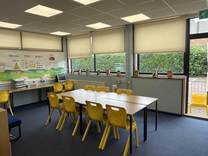
The Learning Base is home to our dedicated team of Learning Support Assistants, Assistant SENDCos, and the SENDCo. Together, we provide targeted interventions to support students who need additional help on their educational journey.
|
The base comprises a smaller classroom, intervention rooms, and supported social spaces. Intervention rooms offer targeted support with numeracy, literacy and social skills. The Nest offers students a calm and supportive start to the day, providing a space to connect with our team and prepare for the day ahead. During social times, it supports the development of social skills through small group activities such as board games, LEGO, and mindfulness colouring. Take 10 offers a space to students who need to regulate and reset before returning to lessons. Students benefit from access to computers and educational software. |
At the start of Year 7, all students complete baseline assessments to inform our teaching and ensure tailored support and interventions are in place.
We value strong partnerships and work closely with primary schools, families, and students to gather key insights. This information is compiled into a student profile, which is shared with teachers to support a smooth and successful transition.
Our school fosters a caring, inclusive ethos and is committed to providing all students with a broad, balanced curriculum. We support our staff in delivering high-quality lessons, guided by the belief that what benefits students accessing SEND support benefits all learners.
Our Head of SENDCo is Mrs K Elliott.